November 5, 2024
Solved

Quickviews and the Consolidation dimension

  • November 5, 2024
  • 2 replies
  • 1 view

Is there a way to drill through the entity hierarchy in a Quickview that shows the total of Top in the Consolidation dimension? I have users asking me if this is possible.  

ScottCharles_0-1730825594223.png

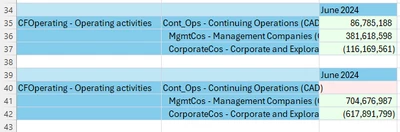
In the example above 87M is the total amount of the child entities including eliminations showing in the second Quickview but no total. The first Quickview is at local before eliminations therefore doesn't addup to the total of 87M. I've tried to use CAD but get the same numbers as local.    

Best answer by db_pdx

Hi Scott: I'm a big fan of the Origin (O#) dimension for analyzing anything related to eliminations.  Here is a member filter you might try adding to your columns to see if it satisfies your user's request:

O#BeforeElim, O#Elimination, O#Top, 
O#DirectElim, O#IndirectElim

The other option if they want to follow the consolidation logic is putting all the Consolidation (C#) members into the column and then use an E#Entity.Tree on the row:

C#Local, C#Translated, C#OwnerPreAdj, C#Share, C#Elimination, C#OwnerPostAdj, C#Top

Cheers, -db

edit: typo, and additional option

2 replies

db_pdxAnswer
November 5, 2024

Hi Scott: I'm a big fan of the Origin (O#) dimension for analyzing anything related to eliminations.  Here is a member filter you might try adding to your columns to see if it satisfies your user's request:

O#BeforeElim, O#Elimination, O#Top, 
O#DirectElim, O#IndirectElim

The other option if they want to follow the consolidation logic is putting all the Consolidation (C#) members into the column and then use an E#Entity.Tree on the row:

C#Local, C#Translated, C#OwnerPreAdj, C#Share, C#Elimination, C#OwnerPostAdj, C#Top

Cheers, -db

edit: typo, and additional option

November 5, 2024

The Origin dimension helped in the columns, I was able to drill down and the rows and columns tie. 


ScottCharles_0-1730845226603.png

Thanks,